
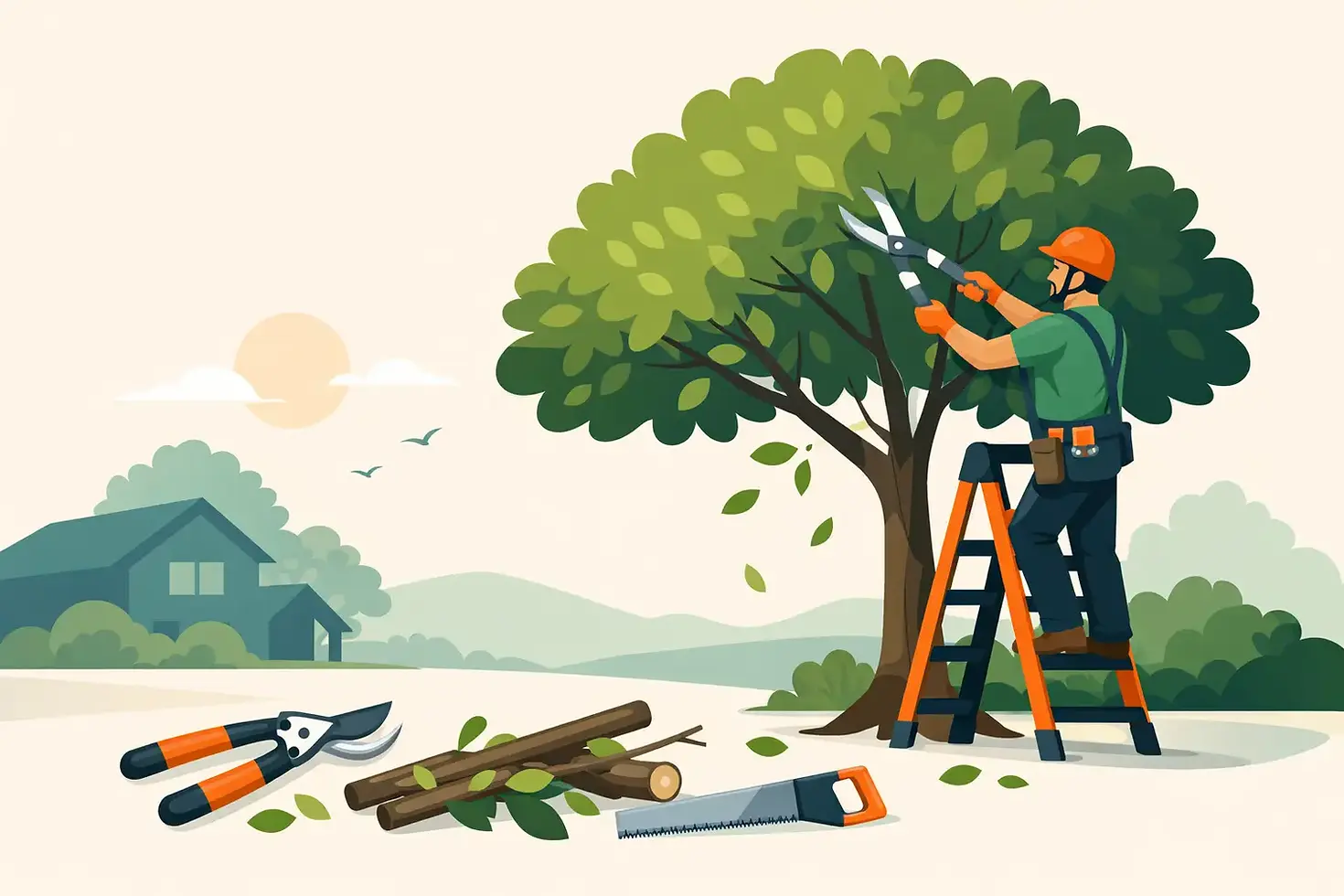
When to Book Tree Pruning Services

A tree rarely causes concern all at once. More often, it is the low branch brushing a path, the crown beginning to lean over a roofline, or deadwood showing up after a spell of rough weather. That is usually when tree pruning services move from a nice idea to a practical necessity.
Good pruning is not simply about cutting a tree back. Done properly, it helps manage risk, supports long-term health, improves structure and keeps the tree in proportion with its surroundings. Done badly, it can weaken growth, invite decay and leave a tree looking harsh and unbalanced for years. For homeowners, estates and site managers alike, the difference matters.
What tree pruning services are really for
People often use the word pruning to cover almost any reduction or trimming work, but professional tree pruning is more precise than that. The aim is to remove or shorten selected parts of the canopy for a clear reason, whether that is to reduce end weight on an extended limb, improve clearance over a driveway, remove dead or damaged branches, or guide a younger tree into a stronger shape.
In practice, the right approach depends on the species, age, condition and location of the tree. A mature oak near a boundary calls for different decisions from a fruit tree in a garden or a line of trees on a commercial site. The surrounding environment also matters. A tree in an open field can often be left to develop naturally, while one overhanging roads, buildings, footpaths or play areas needs closer management.
That is why careful pruning is as much about judgement as it is about equipment. The work should respect the biology of the tree rather than force it into an artificial shape.
Signs a tree may need pruning
Some signs are obvious. Dead branches in the canopy, limbs rubbing together, storm damage, and branches obstructing access are all common reasons to arrange an inspection. Other signs are subtler. Dense growth can reduce light and airflow, a previously balanced crown may start becoming one-sided, or lower limbs may gradually interfere with pedestrians, vehicles or buildings.
There is also the question of prevention. Waiting until a branch fails is rarely the best option if the warning signs were visible beforehand. Targeted pruning can reduce the chance of future breakage, especially where weak unions, overextended limbs or previous poor cuts have created structural issues.
That said, not every untidy tree needs work. Trees are living structures, not manufactured ones, and a degree of irregularity is normal. Honest advice matters here. Sometimes the best recommendation is limited intervention rather than extensive cutting.
Timing matters more than many people realise
One of the most common questions around tree pruning services is when the work should be done. There is no single answer because timing depends on the species and the objective.
For many trees, dormant-season pruning can be suitable because the branch structure is easier to assess and the tree is under less immediate growth pressure. In other cases, summer pruning may be preferable, particularly where growth management is the goal or where certain diseases make winter work less desirable. Deadwood removal and urgent safety work may be carried out whenever needed.
Wildlife also has to be considered. Bird nesting season can affect what is appropriate and when, and a responsible contractor will account for that before work begins. This is one reason routine planning is better than leaving everything until a branch becomes an emergency.
The difference between pruning and over-pruning
There is a persistent idea that cutting harder gives longer-lasting results. In most cases, that is not true. Heavy-handed reduction often leads to stress, vigorous but weak regrowth, larger wounds and a poorer overall form. A tree may look drastically smaller for a while, but the long-term outcome can be more maintenance, not less.
Professional pruning should aim for balance. Enough material is removed to achieve the objective, but not so much that the tree struggles to respond well. The branch collar should be respected, cuts should be well placed, and the natural habit of the species should remain recognisable.
This is where standards matter. Work carried out in line with recognised arboricultural practice, including BS 3998:2010 recommendations for tree work, gives clients confidence that pruning is being done for the right reasons and in the right way.
Tree pruning services for safety and access
For many sites, safety is the main concern. Overhanging branches above roads, car parks, school grounds, public spaces and entrances carry a different level of responsibility from trees in low-use parts of a garden or estate. Risk does not mean every tree must be cut back aggressively, but it does mean decisions should be informed and proportionate.
Clearance pruning is often part of that picture. Branches may need lifting over footpaths or driveways, cut back from structures, signage or lighting, or managed to maintain visibility and access. Commercial operators and public bodies often need this work planned carefully so that disruption is limited and the site remains safe throughout.
In domestic settings, access and usability matter too. A tree that blocks light to a main sitting area, scrapes against a roof in windy weather or crowds a narrow garden can usually be improved with measured pruning rather than drastic alteration.
Tree pruning services and tree health
Pruning cannot fix every tree problem, but it can play an important part in good tree management. Removing dead, diseased or damaged branches can reduce hazards and help prevent further decline in some situations. Selective thinning may improve airflow within the crown where density is contributing to issues, and formative pruning in younger trees can prevent structural defects from becoming larger problems later on.
There are limits, though. If a tree is in decline because of root damage, soil compaction, drought stress or disease, pruning may only address symptoms rather than causes. That is why inspection matters before any work starts. Good arboriculture is not about selling the biggest possible job. It is about identifying what will genuinely help.
For landowners and managers with multiple trees, a longer-term plan often makes more sense than treating each issue in isolation. Regular inspection and cyclical pruning can be far more effective than sporadic, reactive work.
What to expect from a professional pruning visit
A proper visit should begin with assessment, not immediate cutting. The arborist should look at the species, condition, branch structure, defects, surrounding targets and intended outcome. If there are legal constraints such as Tree Preservation Orders or conservation area considerations, those need checking before work proceeds.
Once the scope is agreed, the method should be clear. That includes what will be pruned, how much material is likely to be removed, how access will be managed and how arisings will be dealt with. On more sensitive sites, there may also be discussion around habitat value, protected species and wider landscape objectives.
Competence and accountability matter as much as technique. Insurance, safe working practices and a clear understanding of standards are essential, particularly where trees are near roads, buildings or public areas. For clients across East Sussex, that level of professionalism is often the deciding factor, especially on estates, commercial premises and public-sector land.
Why local knowledge still counts
Tree work is never completely generic. Soil conditions, coastal exposure, prevailing weather, site access and local tree stock all shape what sensible pruning looks like. A contractor working regularly in places such as Seaford, Lewes, Polegate or Hailsham will usually have a better feel for how local conditions affect tree growth and maintenance priorities.
That knowledge is useful not because every tree in the area needs the same treatment, but because context improves decision-making. A wind-shaped coastal tree, for instance, may need a different eye from one growing in a sheltered inland garden.
BC Tree Services has built its reputation on that sort of grounded, practical judgement - combining arboricultural standards with the kind of local experience that helps clients make sound decisions rather than rushed ones.
Choosing the right level of intervention
Not every tree needs regular pruning, and not every concern points to major work. Sometimes a small crown lift or selective deadwood removal is enough. Sometimes a developing structural issue justifies more careful reduction. Occasionally, pruning is only a short-term measure and another course of action needs to be considered.
The right choice depends on your priorities. If appearance is the main issue, the work should still respect tree health. If safety is the driver, the solution should be proportionate to the actual risk. If habitat value is important, that should be part of the conversation as well. The best outcomes usually come from balancing all three rather than focusing on only one.
A well-pruned tree should not look butchered or stripped back. It should look healthier, better balanced and more suited to its setting, often in ways that are noticeable without being dramatic.
If you are starting to wonder whether a tree has become too large, too dense or too close for comfort, that is usually the right time to ask for advice. The earlier a tree is assessed, the more options there tend to be - and the better the chances of keeping it safe, healthy and a good fit for the space around it.


Comments