EST. 2006


Expert Tree Pruning
At BC Tree Services, we provide professional tree pruning and maintenance to keep your trees healthy, safe, and looking their best. Our experienced arborists use industry-approved techniques to improve tree structure, encourage healthy growth, and reduce potential hazards.
Whether you need light seasonal expert tree pruning or full structural management, we deliver reliable tree care for domestic and commercial clients across East Sussex.


Crown reduction
Crown reductions reduce the overall size of a tree while maintaining its natural shape. This technique is commonly used when trees outgrow their space or begin to encroach on buildings, roads, or power lines. By selectively shortening branches, we reduce weight and wind resistance while keeping the tree healthy and balanced.
Benefits:
-
Reduces strain on large limbs
-
Maintains natural tree shape
-
Improves safety around structures
-
Improves aesthetics

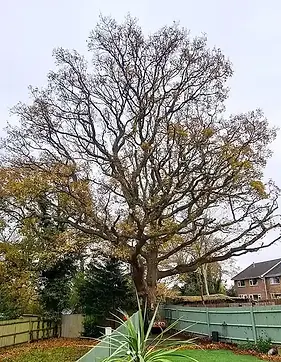
Crown raising
Crown raising is a tree pruning technique used to remove the lower branches of a tree to increase clearance beneath the canopy. This process lifts the tree’s crown higher above the ground, creating more space for pedestrians, vehicles, buildings, pathways, and garden use.
By carefully removing selected lower limbs, crown raising improves visibility, access, and light penetration while maintaining the tree’s natural shape and structural balance. It is commonly carried out along roadsides, driveways, footpaths, and in gardens where branches may hang too low.
Crown raising can:
-
Improve access for vehicles and pedestrians
-
Prevent branches from obstructing buildings, signs, or street lighting
-
Increase natural light beneath the tree
-
Enhance the tree’s overall appearance and structure
When performed correctly, crown raising is a safe and effective way to manage tree growth while preserving the tree’s health and beauty.
Crown reshaping
Crown reshaping is a specialised pruning technique used to improve the natural structure, balance, and appearance of a tree. By selectively trimming and reducing certain branches, the crown is carefully shaped to create a more uniform and aesthetically pleasing form while maintaining the tree’s health and stability.
This service is often carried out when trees have grown unevenly, become misshapen due to storm damage, or when branches begin to extend too far in one direction. Crown reshaping helps restore the tree’s natural silhouette while preventing excessive strain on heavy or poorly balanced limbs.
Benefits of crown reshaping include:
-
Improving the overall appearance of the tree
-
Creating a balanced and natural crown structure
-
Reducing the risk of weak or poorly positioned branches
-
Allowing better light and air circulation through the canopy
-
Maintaining the long-term health and strength of the tree
Crown reshaping is an effective way to manage tree growth while preserving the beauty and natural character of your landscape.


Formative pruning
Formative pruning is an important tree care technique carried out on young trees to help guide their healthy growth and structure as they develop. By carefully removing or shortening selected branches, formative pruning encourages a strong framework that will support the tree throughout its life.
This type of pruning focuses on establishing a well-balanced crown and a clear central structure while preventing future problems such as weak branch attachments, crossing limbs, or overcrowded growth. Early intervention allows the tree to develop naturally while reducing the need for more extensive pruning later in life.
Benefits of formative pruning include:
-
Encouraging strong and healthy tree structure
-
Preventing future structural problems
-
Promoting balanced growth and natural shape
-
Reducing the need for heavy pruning as the tree matures
-
Supporting long-term tree health and stability
Formative pruning is a proactive approach to tree care that helps young trees develop into strong, healthy, and attractive features within your landscape.
Pollarding
Pollarding is a traditional tree management technique that involves regularly cutting back a tree’s upper branches to a set framework. This process encourages the growth of new shoots from the pollard points, helping to control the tree’s size while maintaining a consistent and manageable shape.
This method is commonly used on certain tree species in urban areas, parks, and streets where controlling the overall height and spread of a tree is important. When carried out correctly and maintained on a regular cycle, pollarding promotes vigorous new growth while reducing the risk of large, heavy limbs developing over time.
Benefits of pollarding include:
-
Controlling the size and spread of a tree
-
Encouraging fresh, vigorous growth
-
Reducing the risk of large, heavy branches
-
Maintaining a consistent and structured tree shape
-
Making trees more suitable for urban environments
We do not encourage topping trees which leads to the regular pollarding technique.


Dead wooding
Dead wooding is the process of removing dead, dying, or broken branches from a tree’s crown. Over time, trees naturally develop deadwood as part of their growth cycle, but these branches can become hazardous if they fall or break unexpectedly.
By carefully removing dead or decaying limbs, deadwooding helps improve safety around the tree while also enhancing its overall appearance and health. This service is particularly important in areas where trees are located near buildings, roads, pathways, or public spaces.
Benefits of deadwooding include:
-
Reducing the risk of falling branches
-
Improving safety around the tree
-
Enhancing the tree’s appearance
-
Promoting better airflow through the crown
-
Helping to maintain the tree’s overall health
Dead wooding is an effective and preventative tree maintenance service that helps keep trees safe, healthy, and visually appealing within any landscape.
Tree Pruning FAQs
Why should trees be pruned?
Regular tree pruning improves the long-term health and structure of a tree by removing dead, dying, or crossing branches, improving airflow and light through the canopy, and reducing the risk of branches failing. Pruning also helps maintain a tree's natural shape, keeps it in proportion with its surroundings, and reduces potential hazards to people, buildings, and neighbouring properties.
When is the best time to prune a tree in East Sussex?
The timing depends on the species. Most trees can be pruned from late autumn through to early spring when they are dormant, which reduces stress and the risk of disease entering through fresh cuts. Mid-summer pruning is also acceptable for many species when growth has slowed. However, stone fruit trees such as Cherry and Plum must only be pruned in mid-summer to reduce the risk of silver leaf disease — pruning them in winter or spring leaves them vulnerable to infection.
Will pruning damage my tree?
When carried out correctly by a qualified arborist, pruning improves a tree's structure, health, and longevity. Problems arise from poor technique — cutting in the wrong place, removing too much at once, or using blunt tools — all of which can cause die-back, decay, or structural weakness. This is why it is important to use a trained and experienced tree surgeon rather than attempting significant pruning yourself.
How often should trees be pruned?
This varies by species, age, and location. Mature trees in stable condition may only need attention every three to five years, while younger trees in the early stages of development benefit from more regular formative pruning to establish a strong framework. Trees in constrained spaces near buildings or roads may also need more frequent management to keep them safe and in proportion.
What is the difference between crown reduction, crown raising, and crown reshaping?
Crown reduction reduces the overall height and spread of a tree while retaining its natural shape, and is used when a tree has outgrown its space or is encroaching on structures. Crown raising removes the lower branches to increase clearance beneath the canopy for vehicles, pedestrians, or light. Crown reshaping corrects uneven or unbalanced growth to restore a more uniform and structurally sound canopy. Each technique serves a different purpose and our arborists will recommend the right approach for your tree.
Do I need permission to prune a tree in East Sussex?
You may need permission if your tree is protected by a Tree Preservation Order (TPO) or is located within a Conservation Area. Works on protected trees require approval from the local authority before any pruning can take place. We can check whether your tree is likely to be protected and handle any applications needed. Visit our consultancy page for more information.
Why Choose BC Tree Services?
🌳 NPTC qualified, LANTRA certified, and Arboricultural Association members
🌳 Professional and safe pruning techniques
🌳 Skilled and experienced tree specialists
🌳 Fully insured tree care services
🌳 Friendly, reliable local service
🌳 Free advice and quotations
🌳 20 years experience