
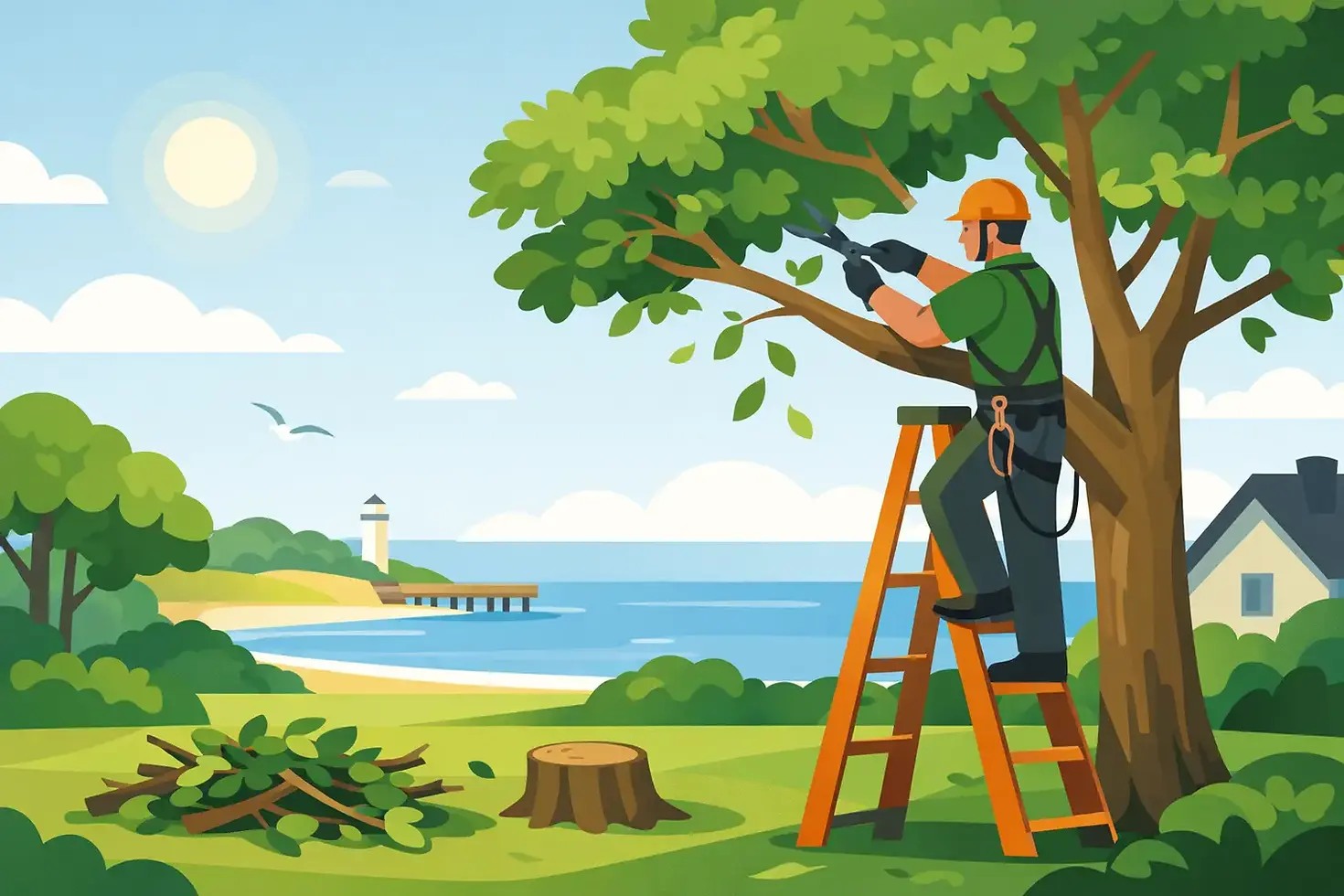
Tree Pruning Seaford for Safer, Healthier Trees
- barnabycoleman
- Aug 7
- 6 min read

A mature tree can be one of the best features of a Seaford garden, but a heavy limb over a driveway, a dense crown blocking light or deadwood above a path needs more than a quick cut-back. Professional tree pruning Seaford property owners can depend on is about making considered changes that improve safety, tree health and the way a tree sits within its surroundings.
Good pruning is not measured by how much material is removed. It is measured by whether the work has addressed a clear need without placing unnecessary stress on the tree. That balance matters particularly in coastal East Sussex, where exposed conditions, wind and salt-laden air can affect growth, branch structure and long-term resilience.
What professional tree pruning in Seaford involves
Pruning is a broad term. Depending on the tree, its condition and its position, the right approach could mean removing dead or damaged branches, carefully reducing an overextended crown, lifting lower limbs clear of a route, or thinning selected growth to improve light and air movement.
Each outcome requires a different method. A young ornamental tree may need gentle formative pruning to establish a sound structure. A large established tree may need a modest crown reduction to reduce leverage on long limbs, while retaining its natural shape. In some cases, the most responsible recommendation is to leave a healthy tree alone and monitor it rather than prune for the sake of it.
This is why a site visit and proper assessment matter. Species, age, past pruning, visible defects, nearby buildings, underground services and the tree's role in the landscape all affect the decision. A tree beside a public footpath presents different considerations from one at the back of a private garden.
The reasons trees need pruning
Safety is often the immediate concern. Dead branches can fall without warning, particularly after high winds. Cracked limbs, rubbing branches and growth extending over roofs, access ways or roads can also require attention. Early intervention can prevent a manageable issue becoming urgent work after a storm.
Pruning can also support the tree itself. Removing dead, diseased or crossing branches helps prevent wounds from developing where branches rub together. Selective work can reduce congestion in a crowded crown, although thinning should never be used as a routine solution for every tree. The tree species and the reason for the work determine whether it is appropriate.
There are practical benefits too. Lower branches may obstruct a gate, parking space or pedestrian route. A carefully managed crown can allow more daylight into a home or garden without leaving the tree bare, unbalanced or vulnerable. For commercial grounds and estates, keeping clearances above paths, entrances and operational areas is an important part of responsible site management.
Appearance has a place in the conversation, but it should not override tree welfare. A well-pruned tree should still look like the species it is. Severe topping, lopping or indiscriminate cutting often produces rapid, weak regrowth and can shorten a tree's useful life.
Reduction, thinning and lifting are not interchangeable
A crown reduction shortens selected branches back to suitable growth points. It may be appropriate where a crown has become too large for its setting or where weight needs to be reduced on extended limbs. Done properly, it retains a balanced outline rather than leaving blunt stubs.
Crown thinning removes a small number of carefully chosen branches throughout the canopy. It can reduce density without materially changing the tree's height or overall spread. It is not automatically beneficial, however. Removing too much foliage can stimulate undesirable regrowth and expose internal branches to sun or wind.
Crown lifting removes lower branches to create clearance. This can be useful above paths, driveways and garden features, but it needs restraint. Removing large lower limbs from a mature tree can alter its stability and appearance, so the desired clearance must be weighed against the tree's structure.
Why timing matters
Many pruning jobs are best planned outside the main bird nesting period, generally regarded as running from March to August. That does not mean work is impossible at other times, nor does it remove the need for a wildlife check before any work begins. Birds can nest outside the usual period, and active nests are protected.
Tree species also influence timing. Some trees bleed heavily if pruned at the wrong point in their annual cycle, while others are more susceptible to disease when cut during particular weather conditions. A qualified arborist will take account of the species, the type of work and current conditions before recommending a programme.
Emergency work is different. A hanging branch or a damaged tree affecting access may need to be dealt with promptly, whatever the season. Even then, the aim should be to make the area safe with the least disruptive work that is reasonably possible.
Permissions should be checked before work starts
Before pruning a tree, establish whether it is protected by a Tree Preservation Order or stands within a conservation area. These controls can apply to trees in private gardens as well as larger sites. Carrying out unauthorised work can lead to enforcement action and may also result in the loss of a valuable local feature.
The process and notice requirements vary, so assumptions are risky. A professional tree contractor can help identify the relevant considerations and ensure the proposed work is properly specified. For estates, commercial properties and landowners managing several trees, clear records and a planned approach make future decisions easier to manage.
What good tree work looks like on site
Safe pruning begins before a climber leaves the ground. The team should consider access, drop zones, nearby structures, the public and the condition of the tree. Where branches are being removed above a garden, drive or footpath, work areas need to be controlled carefully to protect people and property.
Cuts should be made in the right place, preserving the tree's natural defence systems and avoiding unnecessary wounds. Branches should be lowered in a controlled way where space is limited, rather than dropped. On completion, the site should be left tidy and arisings handled responsibly.
The standard of work matters long after the team has left. BC Tree Services carries out tree work in line with BS 3998:2010, the recognised British Standard for tree work recommendations. This supports a thoughtful approach based on the tree's biology, the client's objectives and the wider environment, rather than a one-size-fits-all cut-back.
Signs it is time to arrange an assessment
You do not need to diagnose a tree problem yourself. A visible change is often enough reason to ask for advice. Look out for dead branches in the crown, new cracks or splits, limbs resting on a roof, mushrooms around the base, sudden leaning, branches rubbing together, or growth that now obstructs a route or building.
After strong winds, it is sensible to inspect trees from ground level without standing beneath damaged limbs. Do not attempt to remove a hung-up branch with a ladder or by pulling it from below. Trees store weight and tension in ways that are difficult to judge, and seemingly small branches can cause serious injury.
For larger gardens, rural properties and managed grounds, routine inspections can identify smaller defects before they affect safety or require extensive work. The frequency depends on the number, size and location of trees, as well as the level of public use around them.
Choosing a contractor for tree pruning
Tree pruning combines specialist knowledge with high-risk practical work. The contractor should be able to explain what is proposed, why it is suitable and what the finished tree is expected to look like. Clear advice is especially valuable where a request for significant reduction may not be the best option for the tree.
Check that the business is appropriately insured, uses trained and competent staff, follows recognised standards and takes wildlife and legal responsibilities seriously. For work near highways, public spaces, schools or commercial premises, site safety and clear communication are equally essential.
A good contractor will not promise that every tree can be made smaller without consequence. Some trees have been pruned too hard in the past; others have structural issues that call for monitoring, bracing considerations or, occasionally, removal. Honest advice protects both the tree and the people responsible for the site.
The right pruning work leaves a tree safer, healthier and still at home in its landscape. If a tree in your garden or grounds is causing concern, arranging a professional assessment is a sensible first step before a minor issue becomes a difficult one.


Comments